Gardening is Just Failing Repeatedly
8.6.26
From Rachel’s desk:
“Gardening is just failing repeatedly.”
I told my friend Addie this after she showed me a picture of the Texas-sized hornworm wreaking havoc on her cherry tomatoes. She suggested I kick off my next newsletter with this sparkly encouragement, so here we are.
I don’t think we talk about failure enough. Or if we do, it’s as something to be absolutely avoided, as if that were ever possible. I think most of us know, at least in theory, that failing is an essential part of any big undertaking. Yet, we find ourselves in an era where images of seemingly failure-free people and projects abound. These are comforting to look at, but that reel showing seeds going into perfect soil, then cut to a bountiful harvest, isn’t real. The “cut-to” skips the hard parts, and the good parts, and makes gardening feel more like another product to consume, rather than a process to enjoy. You could probably say the same thing for reels about making art, parenting, writing, playing music, you name it, but I’ll stick with what I know.
When I’m selling flowers at the farmers market, I often ask my customers if they like to garden. I don’t enjoy the small talk of sales, and I’m introverted, so I’d rather just talk about plants. Many folks will say something along the lines of “Oh, no I always kill plants,” to which I respond “Oh, me too. I kill plants all the time. I just keep trying.” For some reason, that surprises people, and usually they laugh and seem to relax. Magically, then we are no longer talking like a salesperson and customer, just two humans, discussing the very human and often hilarious process of trial, error, and trial again.
I hope that whatever really difficult, exciting thing you are working on this year, whether it’s big or small, out in public or behind the scenes, you can take a moment to thank yourself for failing repeatedly. You are doing it right, and the world needs the fruits of your labor.
Field Notes:
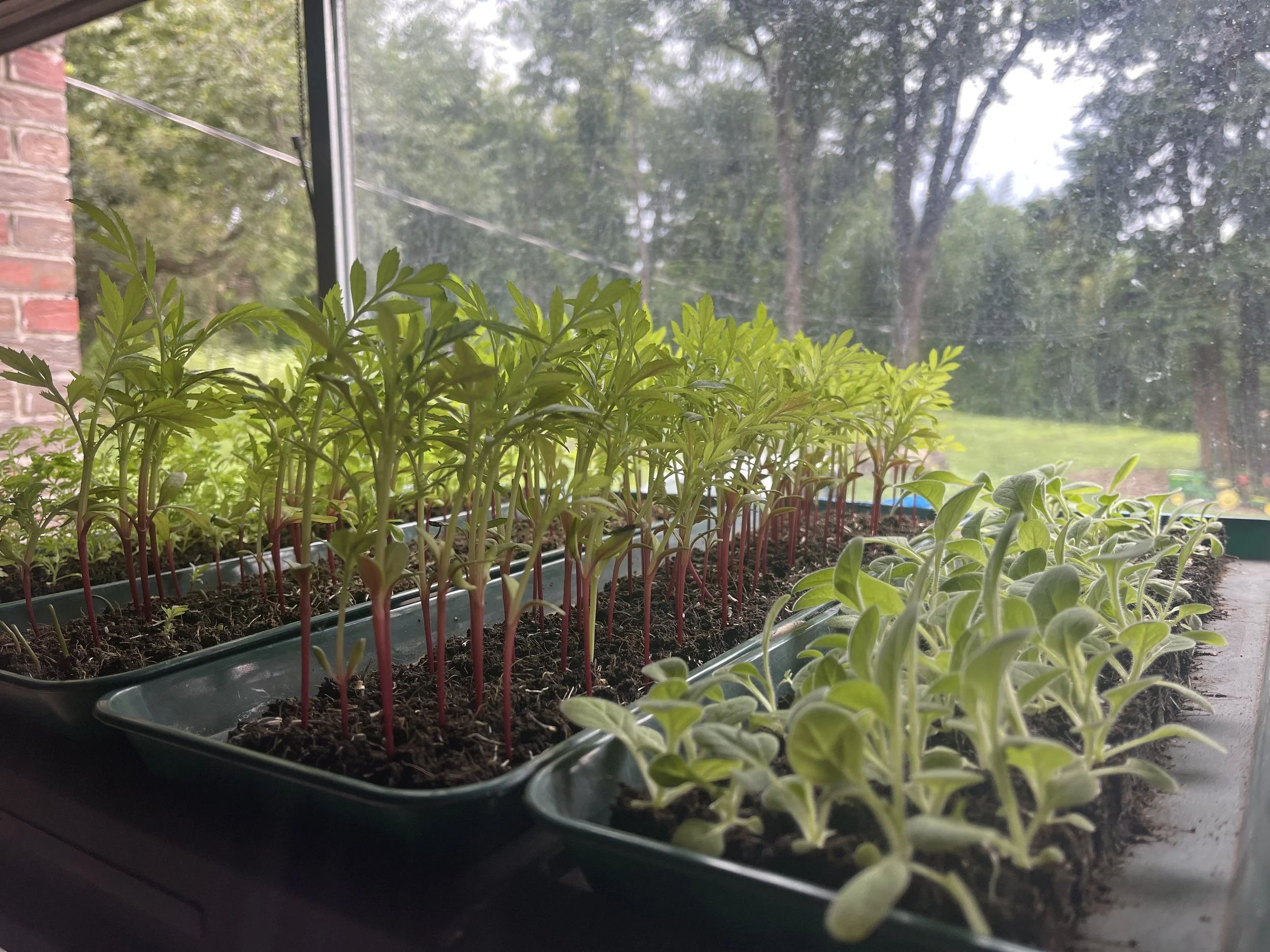
It’s seed starting time! Yes, believe it or not, it’s now time to sow seeds for the flowers we will be enjoying this spring. There are a ton of beautiful flowering plants out there that don’t mind sitting snug in the soil all winter, and they actually benefit from the extra time to get established before it gets hot all over again. Examples are perennials like echinacea, rudbekia, foxglove, and hellebore, and hardy annuals like snapdragons, pansies, sweet peas, and dianthus. I’m sowing all of these and more, into little soil blocks under grow lights, which should be ready to be transplanted into our fields or into pots in about 4 weeks. Now that I’m getting the hang of it, I’m loving the soil block method because you can grow hundreds of plants in a really small space, and they sit on trays without holes so watering is less messy. That’s great when your seedling operation is, say, in your dining room, as mine was for years. Here’s a link to the soil blocking gadget I have if you’d like to give it a try:
https://thegardenersworkshop.com/products/soil-blocker-small
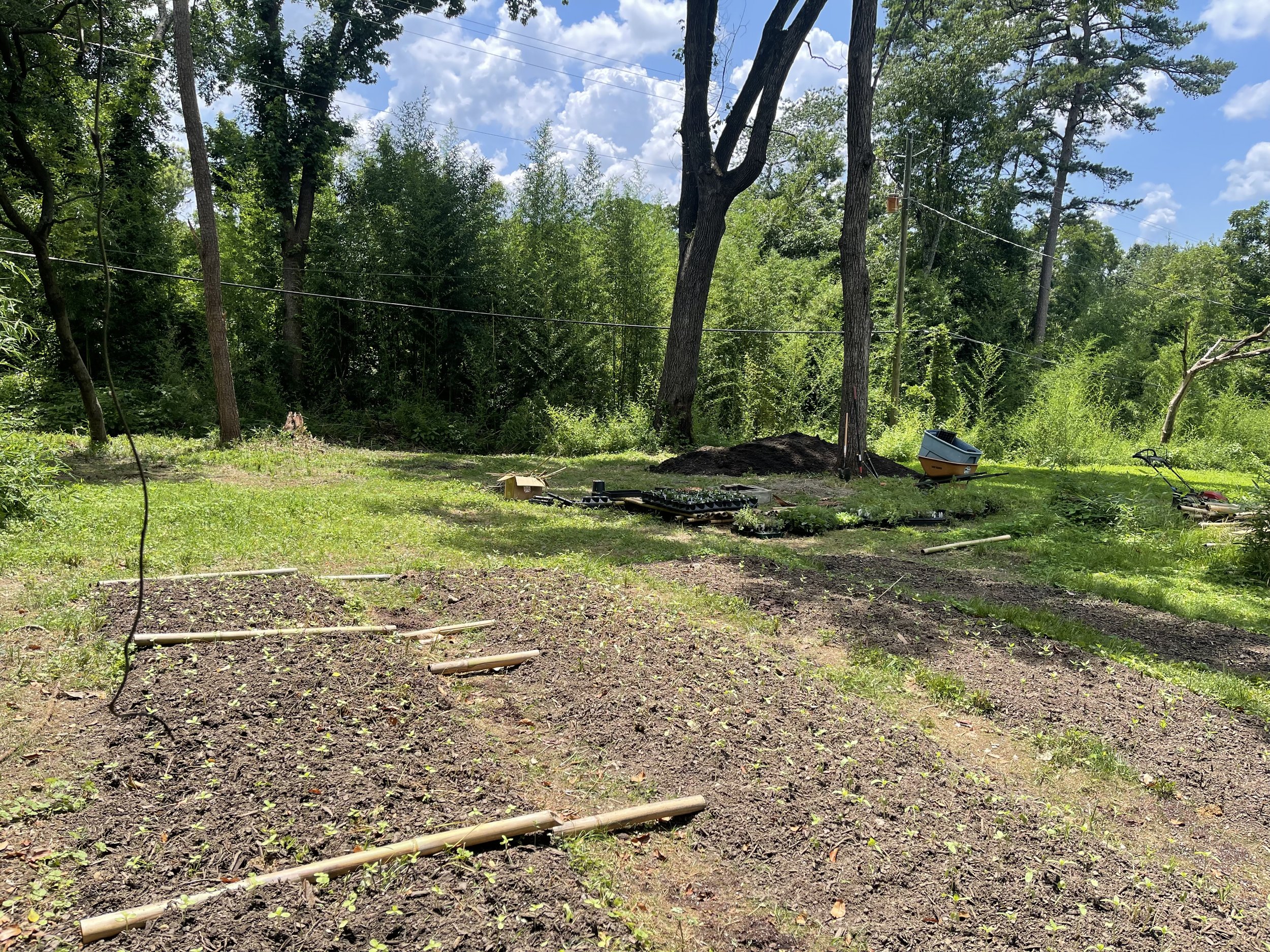
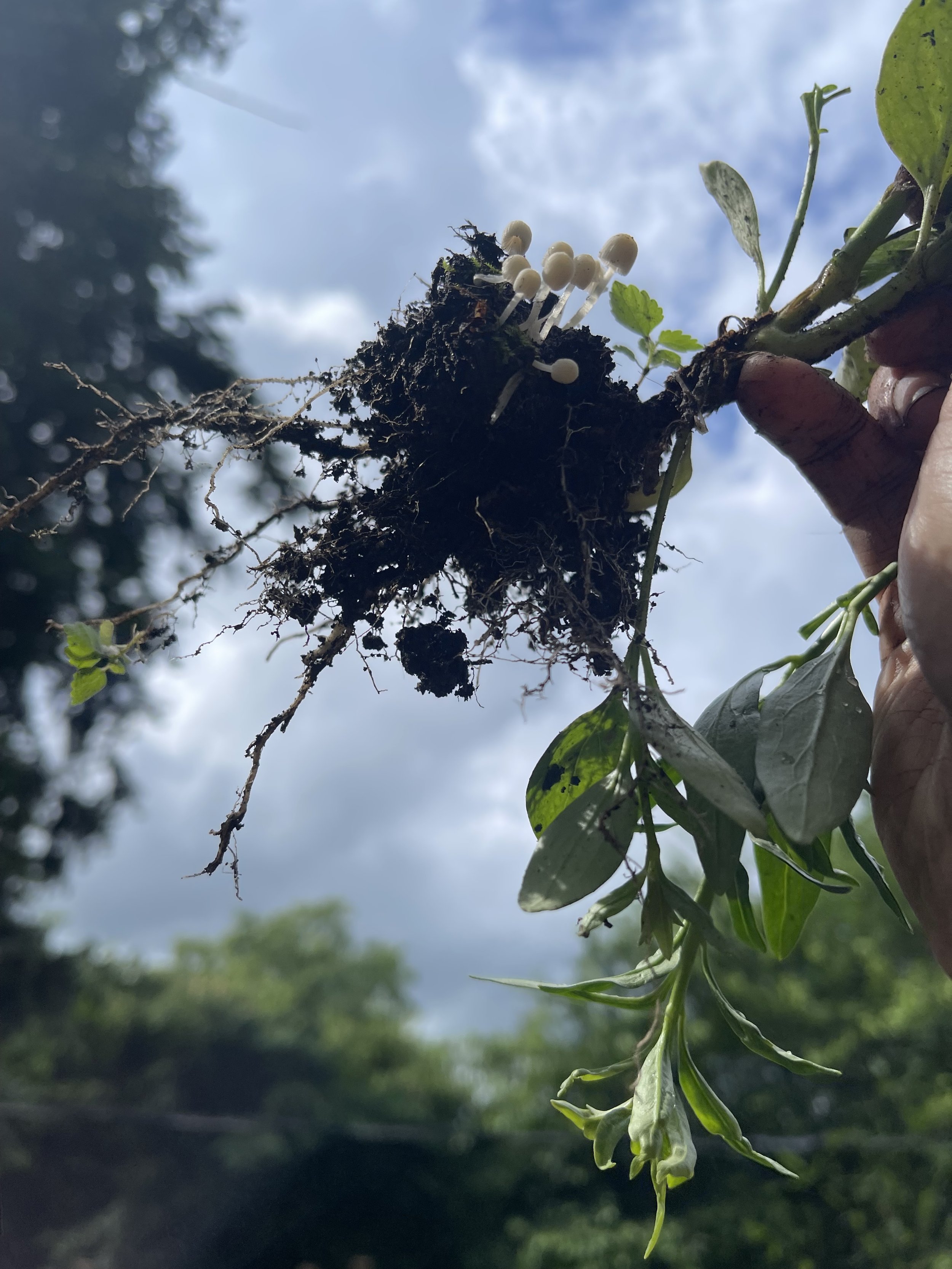
The brand-new fields, previously a bamboo forest, are looking good in their new cover crop mix of millet, sunhemp, Mexican sunflower, giant marigolds, and sulphur cosmos. The main point of growing a cover crop is to improve the soil health so your cash crop doesn’t need as many inputs to thrive. It’s typical to use just one plant as your cover crop, for example legumes like soybeans or field peas. Legumes add nitrogen back into the soil through a very cool partnership they have with a specific microbe. When the legume is done growing, the Nitrogen stays in the soil and can be used by the next plant. The wild thing is, all plants have certain microbes that they like to partner with, and just like how hummingbirds miraculously find cardinal flowers, the microbes find their host plant and together they get to work exchanging and moving around nutrients in the soil. I recently learned that farmers and researchers are finding even better soil health benefits from using a diverse plant mix in cover crops, which attracts and feeds a more diverse range of microbes. Diversity=healthier ecosystems. Who knew? So, I’m giving it a shot at my farm, and I’ll let you know how it goes. Here’s a great podcast episode on the subject if you are as excited about soil biology as me:
https://podcasts.apple.com/us/podcast/the-no-till-flowers-podcast/id1545850888?i=1000742995247
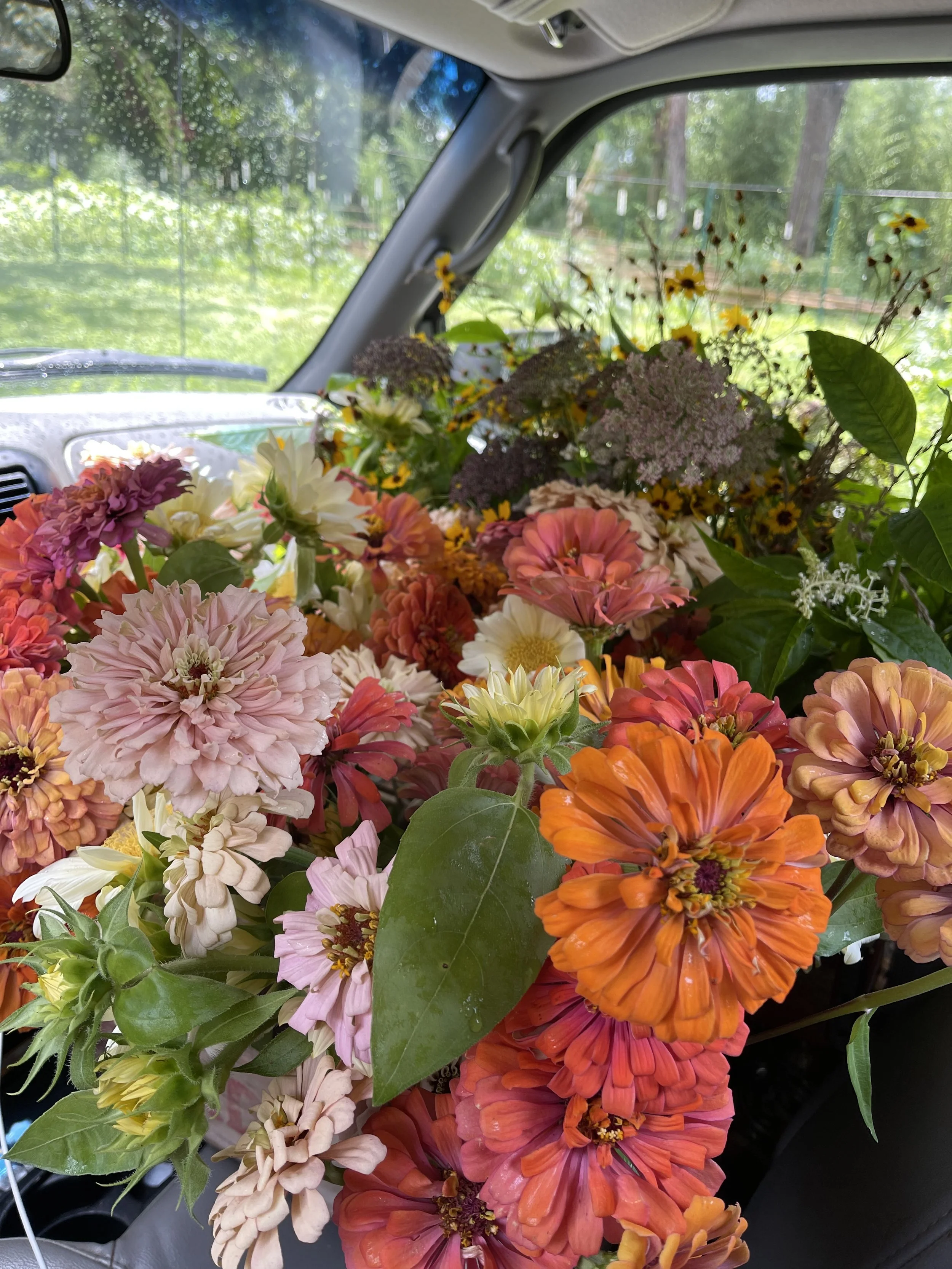
I’m still cutting some really gorgeous blooms from the field, but of course some rows look about as tired of the heat as we are. I’ve noticed the slightest smell of fall in the air most mornings this week. What is that? Just sunburnt leaves I suppose, but it’s fabulous, especially mixed with the scent of basil that I planted entirely too much of this year. Is there such a thing as too much basil? No, definitely not.
Thanks as always for following along!
Till next time,
Rachel